

What does hurricane season mean for a roof in Arcade, NY?
Hurricane season does not require a storm to make a direct landfall nearby to affect local homes. Remnants of tropical systems can bring strong wind, heavy rain, power outages, and falling branches well inland. The official Atlantic hurricane season runs from June 1 through November 30, with activity typically highest from mid-August through mid-October. ([nhc.noaa.gov](https://www.nhc.noaa.gov/climo/?utm_source=openai))
For homeowners, the main roof concerns are not only wind speed. A roof may also be stressed by wind-driven rain, clogged drainage, loose outdoor items, saturated soil around trees, and damage that already existed before the storm. Preparing early is especially useful in a community where homes may include older roofing systems, additions, garages, porches, and mixed-age construction.
Which roof problems should be checked before a storm?
The most useful inspection is a careful visual review from the ground, attic, and upper levels of the home. Do not climb onto the roof if the surface is steep, wet, icy, deteriorated, or difficult to access safely.
Look for:
- Missing, lifted, cracked, or curled shingles
- Exposed fasteners or roofing materials
- Loose metal flashing around chimneys, vents, skylights, and roof edges
- Sagging areas on the roof surface or inside the attic
- Dark stains, damp insulation, or daylight visible through roof boards
- Damaged soffits, fascia, gutters, or downspouts
- Tree limbs resting over the roof or touching overhead utility lines
- Loose ridge caps, vent covers, or other rooftop components
A small defect can become a leak during wind-driven rain. A lifted shingle may allow water beneath surrounding materials, while loose flashing can permit water to enter around a chimney or plumbing vent.
How can gutters and drainage protect the roof?
Gutters do not prevent hurricane-force winds, but clear drainage helps limit water damage during intense rainfall. Before severe weather, remove leaves, roof granules, twigs, and other debris from gutters and downspouts.
Check that:
- Downspouts discharge water away from the foundation
- Elbows and extensions are securely connected
- Gutters are not pulling away from the fascia
- Water does not pour over the gutter edge during ordinary rain
- Downspouts are not blocked below ground or at their outlets
- Roof valleys are free of accumulated debris
In older homes, gutters may be undersized, poorly pitched, or attached to weakened fascia boards. Heavy rain can expose those problems quickly. Water overflowing near an exterior wall may contribute to basement seepage, foundation moisture, or erosion around the home.
What should homeowners do about trees and outdoor objects?
Wind damage often begins with objects that are not part of the roof. Patio furniture, planters, children’s equipment, grills, unsecured decorations, and loose sections of fencing can become airborne. Store or anchor these items before a storm watch becomes urgent.
Trees deserve particular attention. Dead limbs, branches with visible cracks, and limbs that extend over the roof can cause serious damage when wind increases. Do not attempt to remove a large or unstable limb near a structure or utility line. That work can create a greater safety hazard than the original problem.
Trees do not need to be removed simply because they are near a home. The more useful question is whether they show signs of disease, decay, unstable attachment, or root damage. A careful evaluation is warranted when branches are hanging unusually low, bark is peeling extensively, or the ground has become soft around a leaning tree.
Are roof vents, chimneys, and skylights vulnerable?
Yes. Roof coverings often receive attention first, but penetrations and attached components are common points of weakness.
Inspect visible areas around:
- Chimney flashing and masonry joints
- Plumbing vent boots
- Bathroom and kitchen exhaust vents
- Skylight frames and covers
- Attic ventilation openings
- Satellite equipment or other rooftop attachments
- Metal edging along the roof perimeter
Do not seal over a problem with caulk as a permanent solution. Caulk may temporarily block a small gap, but it will not correct loose flashing, damaged roofing, deteriorated vent materials, or movement around a chimney. Avoid covering attic vents, soffit vents, or ridge vents with plastic or tape. Proper ventilation must remain open unless a specific emergency instruction says otherwise.
Should an older roof be replaced before hurricane season?
Not necessarily. Age alone does not determine whether a roof can withstand severe weather. Condition, installation quality, previous repairs, roof design, exposure, and the type of roofing material all matter.
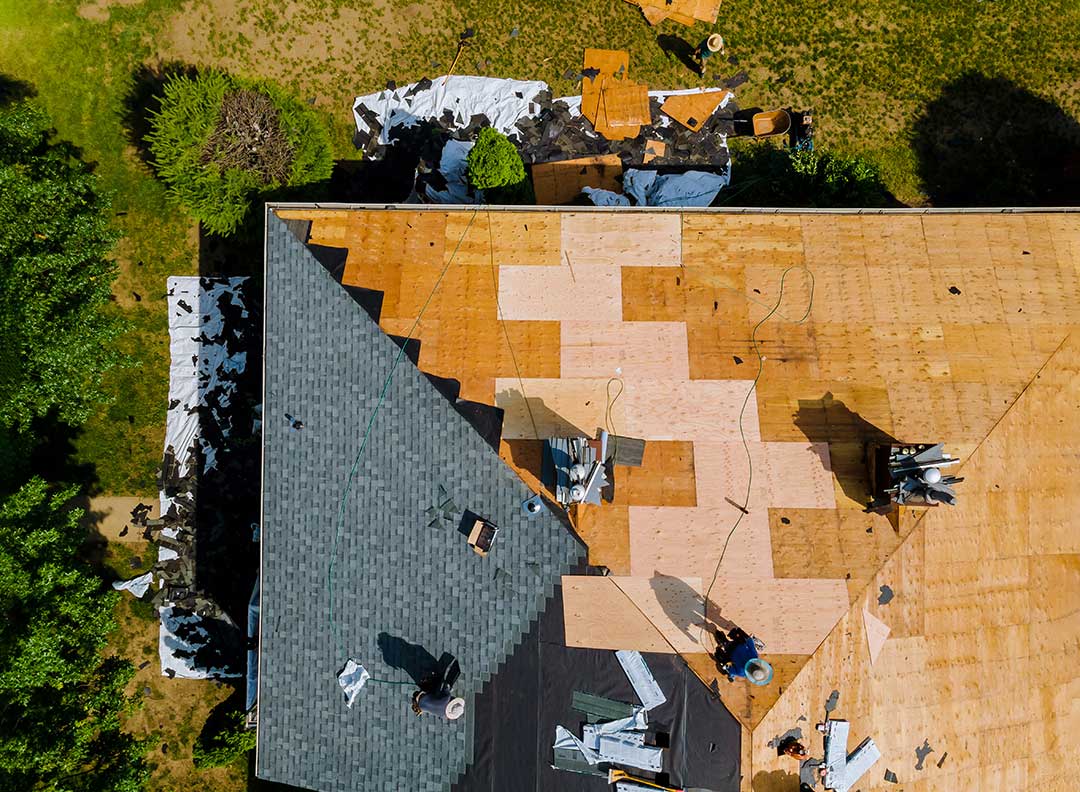
An older roof deserves closer attention if it has repeated leaks, widespread granule loss, brittle or missing shingles, soft decking, visible sagging, or multiple temporary repairs. However, replacing a roof immediately before a major storm can be risky if the work cannot be completed carefully and according to applicable requirements.
A practical approach is to document existing conditions with dated photographs. Photograph roof slopes from the ground, gutters, flashing, ceilings, attic areas, and detached structures. This record can help distinguish new storm damage from older deterioration and may be useful for insurance documentation.
What should be done if a storm is approaching?
Once a warning is issued, roof work should stop. Do not climb onto the roof, inspect gutters, remove branches, or make exterior repairs in strong wind or lightning.
Before conditions worsen:
- Secure or store loose outdoor objects
- Close and latch windows, doors, and garage doors
- Move valuables away from ceilings or exterior walls with known leaks
- Place buckets or plastic sheeting under existing interior drips, without creating a fall hazard
- Keep flashlights, batteries, medications, and important documents accessible
- Monitor official weather and emergency instructions
The National Hurricane Center notes that preparedness becomes difficult once tropical-storm-force winds begin, which is why important tasks should be completed well before the strongest weather arrives. ([nhc.noaa.gov](https://www.nhc.noaa.gov/aboutgloss.shtml?utm_source=openai))
Never use a ladder during high winds. Wet shingles, unstable gutters, and hidden electrical hazards can make a seemingly minor repair dangerous.
What should be checked after the storm?
Wait until wind, lightning, and immediate hazards have passed. From the ground, look for missing roofing materials, displaced flashing, hanging gutters, damaged vents, fallen limbs, and visible openings. Inside the home, check attic spaces and upper ceilings for new moisture.
Do not assume a roof is undamaged because there is no ceiling stain. Water can remain above insulation or travel along rafters before becoming visible.
After a storm:
- Photograph damage before moving debris when it is safe
- Keep people away from sagging ceilings or unstable structures
- Use temporary coverings only when they can be installed safely from the ground or a secure location
- Avoid entering areas with standing water near electrical equipment
- Report downed lines and hazardous trees through the appropriate emergency channels
- Preserve damaged materials when possible until documentation is complete
A roof that has performed well through ordinary rain may still have hidden wind damage. Careful preparation before hurricane season, followed by a cautious post-storm inspection, gives households a better chance of identifying problems before a minor opening becomes extensive water damage.
