
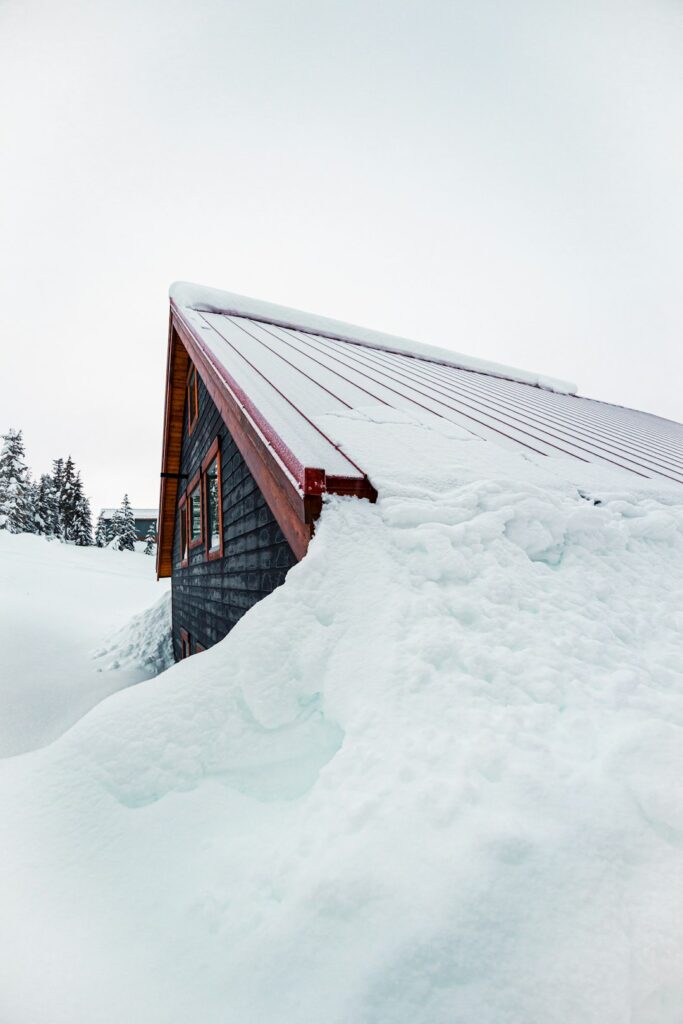
Ice dams are ridges of frozen water that form along the lower edge of a roof. They develop when heat escapes from the living space, warms parts of the roof, melts snow, and sends water toward a colder eave where it refreezes.
For homes in Arcade, NY, repeated snow, freezing temperatures, and winter freeze-thaw cycles can create conditions that allow ice dams to grow. The problem is not simply the presence of snow. It is the uneven temperature across the roof surface.
What causes an ice dam?
An ice dam forms when the upper portion of a roof becomes warm enough to melt snow while the roof edge remains below freezing.
The process usually looks like this:
- Heat escapes into the attic or roof cavity.
- Snow melts on the warmer section of the roof.
- Meltwater flows downward beneath the remaining snow.
- The water reaches the colder roof edge and freezes.
- Additional meltwater collects behind the ice ridge.
As the dam grows, water may remain on the roof instead of draining into the gutters. It can work beneath shingles, enter the attic, or travel into wall and ceiling assemblies.
Ice dams are more likely on roofs with uneven insulation, air leaks around attic openings, blocked soffit vents, or areas where roof geometry creates warmer and colder sections. Valleys, dormers, roof-to-wall intersections, and sections above heated rooms can be especially vulnerable.
Why are ice dams a concern?
An ice dam can cause interior water damage even when the roof itself appears intact. Water may seep beneath shingles and wet roof decking, insulation, rafters, ceilings, and wall cavities.
Signs of possible ice-dam damage include:
- Brown or yellow ceiling stains near exterior walls
- Damp attic insulation
- Peeling paint or swollen trim
- Dripping around recessed lights or ceiling fixtures
- Musty odors in the attic
- Wet or deteriorating roof sheathing
- Icicles accompanied by indoor leaks
Large icicles do not always mean an ice dam is present. Icicles can form from ordinary dripping or melting snow. However, widespread icicles, thick ridges of ice, or repeated leaks near the eaves deserve attention.
Ice dams can also add weight to the roof edge and gutters. In severe conditions, frozen gutters may pull away from the roofline or allow water to drain toward siding, windows, and foundations.
How does attic insulation help prevent ice dams?
Proper attic insulation helps keep indoor heat inside the living space instead of allowing it to warm the underside of the roof.
Insulation should be continuous and evenly distributed, especially near the eaves. Thin areas, gaps, compressed insulation, and exposed ceiling sections can create warm spots on the roof. Attic access panels and pull-down stairs can also allow significant heat leakage if they are not insulated and sealed.
Air sealing is just as important as insulation. Warm, moist indoor air can enter the attic through gaps around:
- Plumbing and electrical penetrations
- Recessed ceiling fixtures
- Exhaust fan housings
- Attic access panels
- Chimney or flue openings
- Interior partition walls
- Ductwork and wiring holes
Adding insulation without addressing major air leaks may leave the underlying problem in place. Moist air entering the attic can also contribute to condensation, damp insulation, and mold growth.
What role does roof ventilation play?
A balanced ventilation system helps maintain more consistent roof temperatures. In a typical vented attic, cooler air enters through soffit vents and warmer air exits through appropriately placed upper vents.
The ventilation path must remain open. Insulation should not block soffit vents, and each rafter space may need a baffle to preserve airflow from the eave into the attic.
Ventilation is not a substitute for insulation and air sealing. A roof with strong airflow can still develop ice dams if substantial indoor heat reaches the roof deck. Likewise, adding a powered attic fan without correcting air leaks can draw conditioned air from the house into the attic and increase moisture movement.
Should snow be removed from the roof?

Removing excessive snow can reduce the amount of meltwater available to feed an ice dam, but roof snow removal can be dangerous and can damage shingles.
A roof rake designed for ground-level use may be suitable for limited snow removal from accessible roof edges, provided the person using it remains on the ground and follows the tool’s instructions. Pulling snow aggressively can loosen shingles, damage flashing, or create falling ice hazards.
Climbing onto a snowy or icy roof is not a safe do-it-yourself task. Snow loads also vary depending on moisture content, drifting, roof design, and previous thawing and refreezing. A visibly sagging roof, cracked interior framing, or sudden new ceiling damage requires immediate attention and keeping people away from the affected area.
Can salt or chemicals remove an ice dam?
Ordinary rock salt and some ice-melting chemicals can damage roofing materials, gutters, plants, and nearby surfaces. They may also create a temporary channel without correcting the cause of the dam.
Using an ax, hammer, shovel, or other sharp tool to break an ice dam can puncture shingles and damage the roof deck. Pouring hot water on a large ice buildup may melt a narrow path while leaving the underlying problem unchanged, and the water may quickly refreeze.
Mechanical removal should be performed only with methods that protect the roofing materials. The safest approach is to address roof heat loss before the next major winter storm and use careful snow management during periods of heavy accumulation.
What roof features reduce water damage from ice dams?
Ice-dam protection installed along the eaves can provide an additional layer of defense. This membrane is placed beneath the roofing material during roof construction or replacement and extends upward from the lower edge of the roof.
It does not prevent ice dams from forming. Instead, it helps reduce the chance that backed-up water will reach the roof sheathing and enter the building.
Proper flashing around chimneys, dormers, skylights, walls, and valleys is also important. These areas can allow water to enter if they are poorly sealed, damaged, or covered by accumulated ice.
What can homeowners check before winter?
A seasonal inspection can identify conditions that increase the risk of ice dams:
- Look for missing, damaged, or curled shingles.
- Check whether gutters and downspouts are clogged or pulling loose.
- Confirm that downspouts discharge water away from the foundation.
- Inspect the attic for damp insulation, stains, mold, or frost.
- Check that attic access is insulated and weather-sealed.
- Look for blocked soffit vents.
- Review areas where bathroom or kitchen exhaust may discharge into the attic.
- Trim branches that could fall onto the roof during a snowstorm.
- Watch for recurring ceiling stains after previous winters.
In older houses, additions, enclosed porches, knee walls, and remodeled attic spaces may have different insulation and ventilation conditions than the original structure. Those transitions can create localized warm areas where ice dams repeatedly form.
When does an ice dam require immediate attention?
Prompt action is warranted when water is entering the home, the ceiling is bulging, electrical fixtures are wet, or a roof section appears to be sagging. Keep clear of areas with active water near electrical components, and place containers beneath drips only where doing so is safe.
A recurring ice dam usually indicates a building-envelope problem rather than an isolated snow event. The long-term solution generally involves improving air sealing, correcting insulation gaps, preserving ventilation, repairing roof details, or combining several of these measures.
For homes exposed to Arcade’s winter conditions, prevention begins in the attic as much as on the roof. A consistently cold roof surface, adequate insulation, controlled indoor moisture, and clear drainage paths make ice dams less likely and reduce the damage they can cause when severe weather arrives.
